30 Second Cherry Trick for Deep Sleep: Everything you need to know.
If you've seen an ad or a video about a "30-second cherry trick" that stops 3 AM wake-ups and restores deep sleep — and you're wondering whether it's real or just another viral sensation — you should continue reading.
Here's the short answer:
The cherry part is real science and the 30-second part is a specific delivery method.
This article breaks down the actual mechanism behind it, what the research shows, and how to use it correctly.
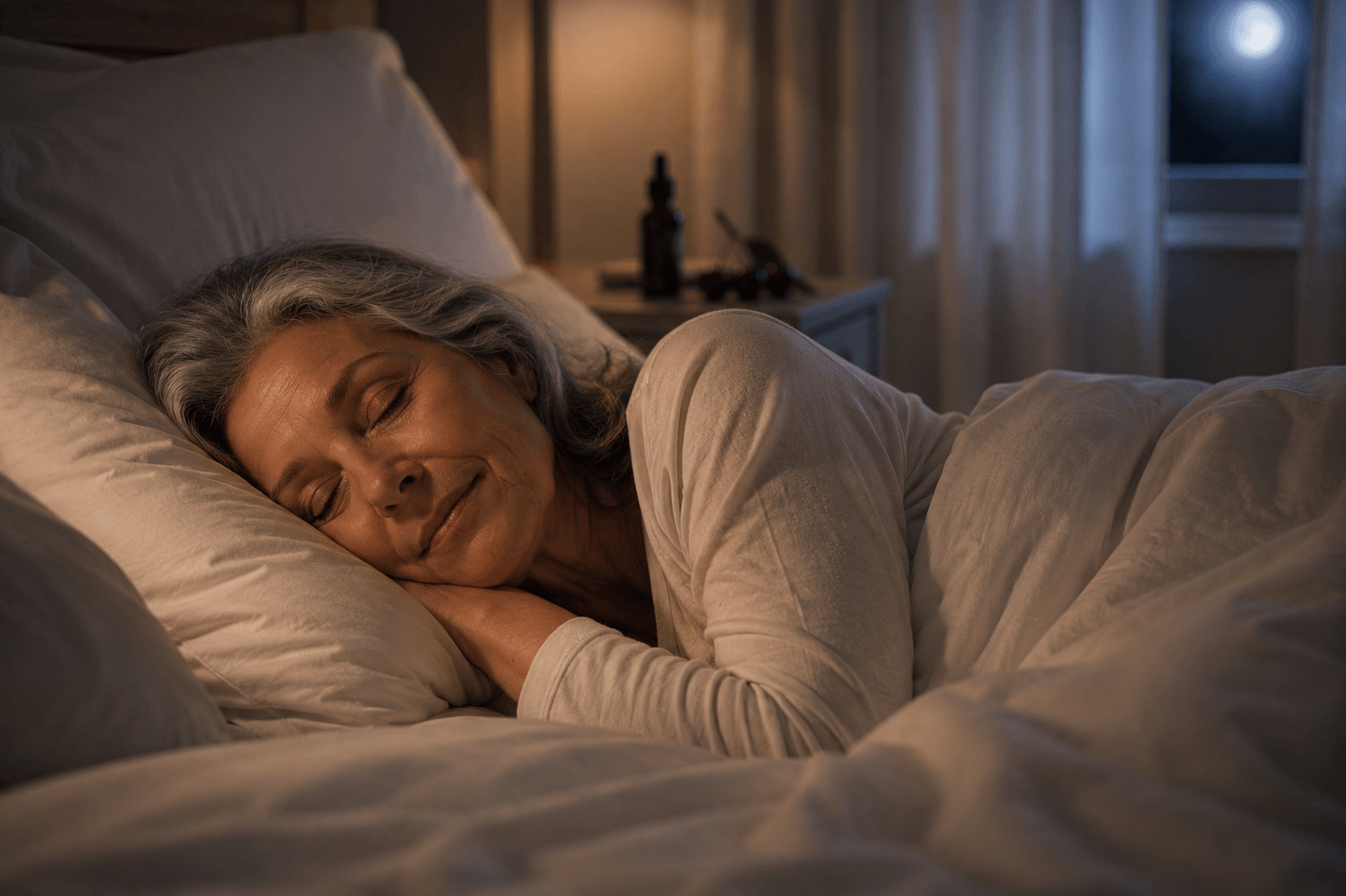
First, The Real Reason You're Not Sleeping (It's Not What You Think)
Most people assume poor sleep is a melatonin deficiency. So they take a 5mg melatonin pill, feel groggy the next morning, and eventually give up.
But according to Dr. Andrew Collins, PhD — a neurology researcher with advanced training in sleep neuroscience and biological systems engineering — melatonin isn't the root problem.
The root cause of poor sleep is a broken sleep pressure system.
Here's how it's supposed to work:
Every second you're awake, your brain produces a molecule called adenosine. Think of it as your body's sleep fuel.
It accumulates throughout the day, building what scientists call "sleep pressure."
By evening, sleep pressure should be near 100% — and your body naturally, automatically powers down into deep, restorative sleep.
It should be as inevitable as running out of fuel.
But after 40, three things systematically dismantle this process:
1. Your brain's adenosine production declines naturally with age.
The biological machinery that builds sleep pressure simply slows down. Less adenosine means less sleep pressure. Less sleep pressure means your body never gets the signal it needs to go — and stay — deeply asleep.
2. Chronic stress blocks adenosine receptors.
Even when your brain produces adenosine, stress hormones can physically block the receptors that are supposed to receive it. Your sleep fuel is being produced, but the engine can't use it. This is why you can feel exhausted and still lie awake at midnight with a racing mind.
3. Modern life finishes the job.
Blue light, caffeine, constant smartphone stimulation — these don't just keep you awake. They actively destroy what's left of your adenosine system, compounding the damage every single night.
The result: your brain never reaches the deep, slow-wave sleep stages where the real restoration happens.
Why This Matters Beyond Just Feeling Tired
Here's the part most people don't know — and it's alarming once you understand it.
During deep sleep, your brain activates what researchers call its glymphatic cleaning system — essentially a biological pressure washer that flushes out toxic proteins that accumulate from normal daily thinking, stressing, and living.
When you don't get sufficient deep sleep, this cleaning crew never fully activates.
Those toxic proteins build up. Night after night. Year after year.
They are the same proteins associated with the development of Alzheimer's disease and dementia.
Poor sleep isn't just making you tired. Without enough deep sleep, your brain cannot clean itself of the toxic byproducts of daily life. This is why sleep researchers now consider chronic poor sleep one of the most significant modifiable risk factors for cognitive decline.
This is also why "sleep scores" matter. The natural population average is around 41 out of 100 — meaning most people are getting less than half the restorative sleep their brain actually needs.
So Where Does the Cherry Trick Come In?
This is where the science gets genuinely interesting.
Tart cherries — specifically the Montmorency variety — were the subject of research dating back decades, but a 1954 discovery laid the groundwork for understanding why certain compounds in these fruits interact directly with the brain's sleep systems.
What researchers found goes beyond the melatonin story you've probably already heard.
Tart cherries contain compounds that directly support adenosine production — the sleep fuel molecule at the root of your broken sleep pressure system. They're not just adding melatonin from the outside. They're helping your brain rebuild its own capacity to generate sleep pressure naturally.
Additionally, tart cherries contain high levels of tryptophan — the amino acid your body converts into serotonin during the day, and then converts that serotonin into melatonin at night. Instead of flooding your system with synthetic melatonin and bypassing your body's own machinery, you're giving your brain the raw materials to make its own sleep hormones on its natural schedule.
The combined effect:
- More adenosine production → stronger sleep pressure → you actually feel sleepy when you should
- More tryptophan → more serotonin → more natural melatonin → you stay in deep sleep longer
- Fewer 3 AM wake-ups, because your brain has the signal it needs to stay asleep, not just fall asleep
A 2025 systematic review across seven interventional studies found that three studies reported significant improvements in sleep duration, sleep efficiency, or sleep onset time, and three studies also reported an increase in melatonin levels after tart cherry consumption. nih
A 2023 meta-analysis combining results from eight trials found that tart cherry juice significantly improved both sleep time and sleep efficiency when measured objectively with sleep-tracking devices — even in cases where participants didn't notice the improvement themselves. Safeway
The science is real. The question is delivery.
Why Drinking Cherry Juice Isn't Enough
If tart cherry works, why not just drink the juice?
You can — and it will help somewhat. But there's a significant problem with how your body processes anything you swallow: digestion destroys potency.
When compounds pass through your digestive system, stomach acid, enzymes, and the liver's first-pass metabolism break them down before they reach your bloodstream. Standard capsules and pills absorb at roughly 22% bioavailability — meaning nearly 80% of what you swallow never makes it to where it needs to go.
Juice is better than capsules, but still subject to the same digestive losses. Notably, a 2024 study that found no effect on sleep used tart cherry in capsule or powder form — every study that found positive results used juice or concentrate. Form and delivery matter enormously. Safeway
This is the problem that the "30-second" part of the cherry trick is designed to solve.
The 30-Second Method: Why It Works Differently
The "30 seconds" refers to a specific delivery technique borrowed from pharmaceutical research.
The technology is called nanoemulsification — originally developed by pharmaceutical companies to make life-saving medications absorb faster in emergency situations. Researchers discovered that if active compounds could be reduced to 1/100th of their normal particle size, they could slip directly through the membranes in your mouth and esophagus into your bloodstream — completely bypassing digestion.
No stomach acid. No liver processing. No waiting.
The result: up to 99% absorption versus the roughly 22% you get from standard capsules.
Applied to tart cherry extract and the other sleep compounds, this means:
- The compounds hit your bloodstream within minutes, not an hour
- Far more of the active ingredients actually reach your brain
- Effects are noticeably faster and more consistent
The "trick" is the method: you hold the liquid under your tongue for 30 seconds, allowing the nano-sized particles to absorb directly through the sublingual membrane — the most absorption-efficient tissue in your mouth — before swallowing.
That's why it's called the 30-second cherry trick. It's not a gimmick. It's a delivery mechanism that makes the science actually work at the level the research shows is possible.
Yu Sleep: The Formula Built Around This Method
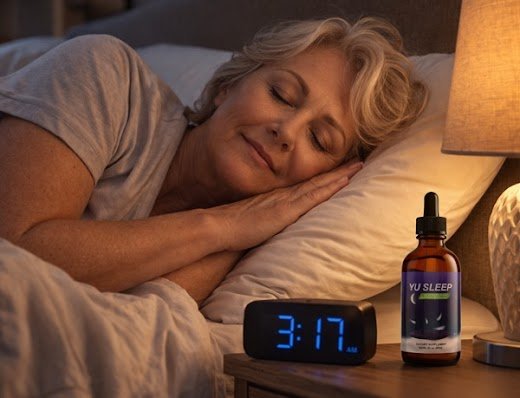
The supplement that popularized this method is Yu Sleep — a nano-enhanced liquid sleep formula built around tart cherry extract as its foundation ingredient, paired with nine additional compounds targeting the full sleep pressure restoration process.
Here's what's in each serving and why it's there:
Red Tart Cherry Extract — The foundation. Supports adenosine production, delivers tryptophan for natural melatonin synthesis, and reduces nighttime wake-ups by giving the brain the signal to stay asleep.
5-HTP — A direct precursor to serotonin, which the body converts into melatonin. Supports the full serotonin → melatonin pathway that tryptophan initiates.
Magnesium Glycinate — Promotes the deep, slow-wave sleep stages responsible for cellular repair, memory consolidation, and the brain's glymphatic cleaning process.
Apigenin — A naturally occurring compound often called "nature's gentle sedative." Reduces time to fall asleep and decreases tossing and turning without causing morning grogginess.
Lemon Balm Extract — Targets cortisol, the stress hormone that spikes in the middle of the night and pulls people out of deep sleep. This is the ingredient specifically targeting 3 AM wake-ups driven by stress.
L-Theanine — Promotes alpha brain waves — the same relaxed-but-alert state associated with meditation. Quiets racing thoughts without sedation.
GABA — The brain's primary inhibitory neurotransmitter. Calms overactive neural firing, helping your nervous system downshift into the state required for deep sleep.
Melatonin (0.9mg) — A deliberately low dose. Enough to signal to your body that it's time to sleep, without the receptor desensitization or next-morning grogginess that comes from the 5–10mg doses found in most supplements.
Vitamin B6 & B2 — Support the enzymatic processes that regulate your circadian rhythm and natural melatonin production at the cellular level.
The formula is designed to work in layers: the cherry extract and 5-HTP rebuild the raw material supply chain; magnesium and GABA deepen the sleep stages; lemon balm and L-theanine address the stress and mental chatter that cause wake-ups; and the low-dose melatonin provides the timing signal your circadian clock needs without overwhelming it.
What Real Users Are Tracking
Because Yu Sleep is popular among people who use wearable sleep trackers, there's unusually concrete data coming from users beyond typical testimonials.
One user reported that before Yu Sleep, her Oura ring showed deep sleep averaging 37 minutes per night. After two weeks of consistent use, she was hitting over 1 hour of deep sleep consistently. Her readiness score moved from the mid-50s to the high 80s, and her heart rate variability doubled.
Others report relationship improvements — sleeping through the night instead of tossing and turning eliminated the friction that was straining marriages. Some note that weight began normalizing — not from dieting, but because when your body spends adequate time in deep sleep, it manages stress hormones like cortisol correctly, which directly affects fat storage and cravings.
These are the downstream effects of actually fixing the sleep pressure system, not just sedating yourself into unconsciousness.
How Long Does It Take to Work?
Yu Sleep positions itself not as a nightly sedative you take forever, but as a restoration protocol — more like physical therapy than a painkiller.
The analogy they use is instructive: when you break an arm, you feel better within days of starting treatment. Pain fades. Movement returns. But stop therapy before the bone fully heals and you're right back where you started — having wasted time, money, and hope.
Your sleep pressure system works the same way.
Most users notice a difference within the first few nights — fewer wake-ups, easier time falling back asleep, waking up feeling more rested. But the deeper repair — full restoration of your sleep architecture and your brain's natural ability to generate sleep pressure independently — takes 3 to 6 months of consistent use.
This is why Yu Sleep is sold in minimum 2-month packages. It's a scientific recommendation, not a sales strategy. One month gets you feeling the improvement. Three to six months locks it in.
Who Is This For?
Based on the mechanism and the research, Yu Sleep is most likely to help people who:
- Are over 40 and have noticed their sleep quality declining gradually
- Wake up in the middle of the night (especially 2–4 AM) and struggle to fall back asleep
- Fall asleep fine but don't feel rested in the morning
- Have tried high-dose melatonin and disliked the grogginess
- Experience racing thoughts or anxiety at night that keeps them awake
- Track sleep with an Oura, WHOOP, or Garmin and consistently see low deep sleep scores
It is not a replacement for medical treatment of sleep apnea, diagnosed sleep disorders requiring clinical intervention, or evaluation of underlying conditions causing secondary insomnia.
The Bottom Line
The 30-second cherry trick is real — but it's not just about drinking cherry juice.
The real mechanism is the combination of tart cherry extract's ability to support your brain's adenosine (sleep pressure) system, paired with a nano-delivery method that actually gets those compounds into your bloodstream at therapeutic levels.
Tart cherry juice will give you some of the benefit. The full protocol — the right compounds, the right form, the right delivery — is what Yu Sleep is built around.
If you've been waking up at 3 AM, dragging through your days on caffeine, and wondering why nothing has worked — this is a mechanism worth understanding, and a product worth trying. The 60-day guarantee removes the financial risk entirely.
Frequently Asked Questions
What is the 30-second cherry trick for sleep?
It's a method of taking tart cherry extract in nano-enhanced liquid form and holding it under your tongue for 30 seconds before swallowing, allowing near-complete absorption through the mouth's membranes. The tart cherry compounds support your brain's adenosine (sleep pressure) system and natural melatonin production.
What is the 30-second cherry trick based on?
Research into tart cherry's effects on sleep dates back decades, with foundational work from 1954 and a growing body of modern clinical studies. The delivery mechanism — nanoemulsification — was adapted from pharmaceutical research on improving bioavailability of compounds.
Does the cherry trick for sleep actually work?
Clinical research shows tart cherry juice improves sleep time and efficiency when measured objectively. The nano-delivery system significantly improves how much of the active compounds actually reach your bloodstream compared to capsules or juice.
What is the cherry trick for insomnia?
For people with chronic insomnia, the cherry trick targets the underlying sleep pressure system — specifically adenosine production and cortisol spikes — rather than simply sedating the brain. It's most effective for sleep maintenance insomnia (waking in the middle of the night) rather than severe sleep-onset insomnia.
What is cherry sleep with tongue?
This refers to the sublingual delivery method — holding the liquid cherry supplement under the tongue for 30 seconds to allow direct absorption through the mouth's mucous membranes into the bloodstream, bypassing digestion.
How long before bed should I take it?
30 minutes before your target bedtime is the recommended timing for Yu Sleep.
Is there a guarantee?
Yes — Yu Sleep comes with a 60-day money-back guarantee.
Copyright 2026 All Rights Reserved.